In conversation with Vivek Law, the IndiaBonds co-founder, explains why fixed income may deserve a larger place in Indian portfolios as the country moves toward Viksit Bharat 2047
For decades, the average Indian investor has largely relied on fixed deposits for safety and equities for growth. Bonds, despite being one of the world’s largest financial asset classes, have remained on the sidelines of most household investment conversations.
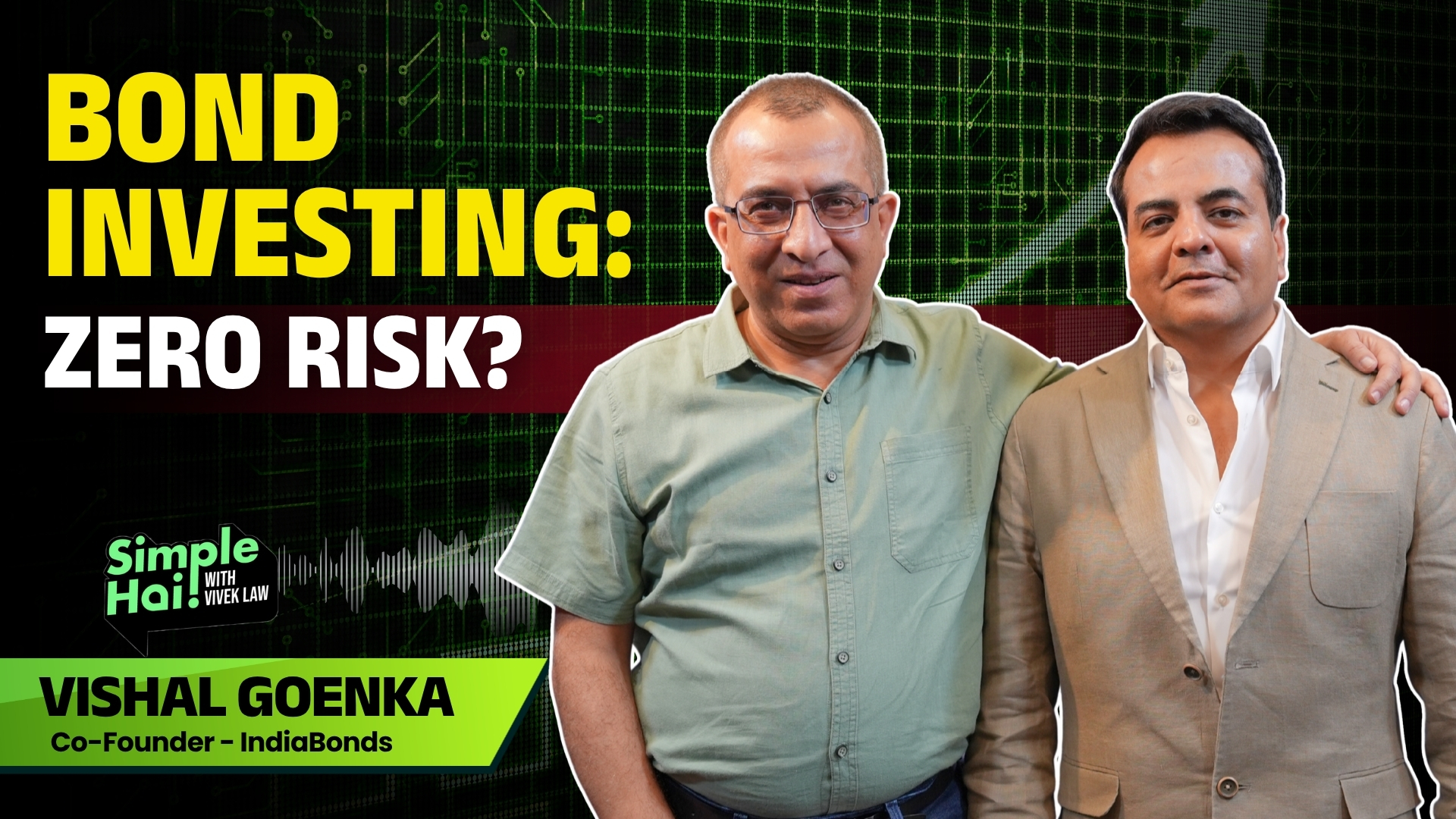
In a recent episode of Simple Hai!, host Vivek Law spoke with Vishal Goenka, co-founder of IndiaBonds, about why that may finally be changing.
Goenka argued that as India moves toward its long-term ambition of becoming a developed economy by 2047, investors may need to think beyond the traditional choice between bank deposits and the stock market.
“Most Indians understand lending money to a bank through a fixed deposit,” Goenka explained during the conversation. “A bond is simply lending money directly to a company or government institution under clearly defined terms.”
Law noted that while retail investors have become comfortable discussing mutual funds and stock market returns, fixed income investing remains poorly understood despite its growing relevance. Goenka believes this gap is beginning to close as digital platforms make bond investing easier for individual investors.
One of the central themes of the discussion was whether bonds should be seen as risky. Goenka pushed back against the common perception that all market-linked products carry the same level of uncertainty. He said the structure of a bond itself creates a different investment profile because investors know the interest payment, maturity date and repayment terms in advance.
That, he said, can make bonds especially valuable during volatile periods in equity markets.
When Law asked how bonds behave when stock markets become unstable, Goenka pointed out that fixed income instruments often act as a stabilising force inside a portfolio. Unlike equities, which can react sharply to economic shocks, bonds generally show lower volatility and can help preserve wealth when market sentiment weakens.
He suggested that many Indian investors still underestimate the role bonds can play in balancing risk.
The conversation also turned to how investors should evaluate a bond before investing. Rather than chasing higher yields, Goenka said investors should first understand the quality of the issuer, whether the bond is listed, and whether the platform offering it operates under regulatory oversight.
According to him, the biggest mistake retail investors make is focusing only on returns without understanding risk.
Law also raised the comparison between direct bond investing and debt mutual funds, a question many investors now face. Goenka acknowledged that debt funds offer convenience and liquidity, but said direct bonds can sometimes provide higher yields for investors willing to hold them to maturity.
For Goenka, the bigger story is not just about individual portfolios. He believes broader participation in bonds could support India’s financial development by directing household savings into productive capital markets rather than leaving large sums parked in low-yield instruments.
As India’s financial landscape matures, the conversation suggests bonds may no longer remain an overlooked corner of investing, but could become an important part of how Indians build wealth in the decades ahead.
Leave a Reply