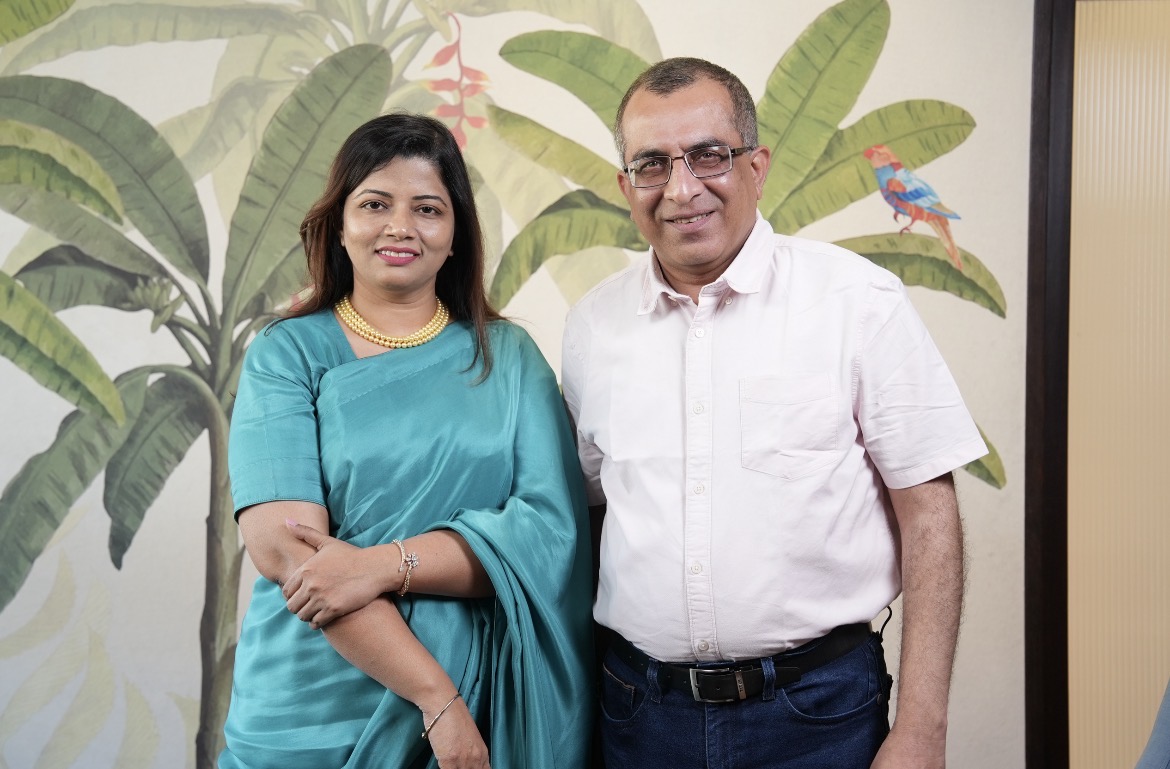
Nearly 80% of mutual fund distributors in India are “accidental.” That arresting statistic set the tone for an eye-opening conversation between Madhu Lunawat, Founder, MD & CEO of The Wealth Company, and Vivek Law, Co-founder & Editor-in-Chief of Simple Hai!. The remark was not a throwaway line. It was a diagnosis of a structural gap in India’s fast-expanding wealth management ecosystem.
As India witnesses record SIP inflows and rising retail participation, Lunawat argued that the backbone of the system, distribution, needs urgent professionalization.
The Accidental Distributor Problem
According to Lunawat, a large portion of India’s mutual fund distributors did not enter the profession through structured financial training but by circumstance. This, she suggested, has long-term implications for investor education and portfolio discipline.
Her solution is not merely regulatory tightening, but capacity building. Through The Wealth Company and its broader ecosystem, the focus has been on rigorous distributor training, structured certification programs such as SIF, and even global executive exposure, including Harvard-style courses. The goal: transform distribution from incidental participation into an intentional profession.
She emphasized the need for a “digital plus physical” model. While technology enables reach and operational efficiency, trust in financial services remains deeply personal. “Scale without trust is fragile,” was the underlying message.
SIP as ‘Sarva Icha Poorti’ — But With Patience
Madhu reframed the popular Systematic Investment Plan (SIP) acronym as “Sarva Icha Poorti” — the fulfilment of all aspirations. But she was quick to add a caveat: SIPs are not shortcuts; they are discipline tools.
Markets will rise and fall. Impatience, not volatility, is often the bigger risk. In India’s increasingly social-media-driven investment culture, the temptation for quick gains can derail long-term wealth creation.
At this juncture, Vivek Law observed that many investors are “penny-wise, pound-foolish.” They hesitate over the minimal fees required to begin investing through mutual funds or debate small expense ratios, while missing out on the compounding opportunity itself. The cost of inaction, Lunawat implied, is far greater than the cost of participation.
Capital Protection: The Wealthy Think Differently
For high-net-worth individuals (HNIs) and family offices, Lunawat noted, capital protection takes precedence over aggressive return-chasing. Preservation first, growth second.
This mindset shift offers a lesson to retail investors. Wealth creation is not about speculative bets but about calibrated risk. In her experience, sustainable portfolios are constructed around risk management frameworks, asset allocation discipline, and governance standards — areas where institutional thinking can benefit individual investors.
The discussion also touched upon how affluent investors increasingly demand transparency, structured advisory and downside protection mechanisms — trends that are shaping product innovation in India’s wealth space.
Tech, AI and the Future of Distribution
Technology, particularly artificial intelligence, is rapidly redefining wealth management. Lunawat believes AI will not replace advisors but augment them — strengthening risk profiling, portfolio analytics and client servicing.
The future, she suggested, belongs to hybrid models that combine algorithmic precision with human judgment. Firms that fail to adapt to this dual framework risk irrelevance.
For entrepreneurs, her closing reflections were direct: build deliberately. Whether one is a distributor, advisor or founder, longevity depends on governance, training and long-term thinking — not opportunistic growth.
India’s investment participation story is expanding rapidly. But as this conversation underscored, participation alone is insufficient. Professionalization of distribution, patience in investing, capital protection discipline and technological adaptation may ultimately determine who truly benefits from the country’s wealth creation journey.
Leave a Reply